


What to Look for When Selecting a Western Bit
What to Look for When Selecting a Western Bit
To start off on a down note: there is no such thing as the perfect bit. Which bit suits you and your horse depends on various factors and, of course, primarily on your horse’s preference.
Aid
Many horses have to resist in order to indicate that something is not right. The horse is telling you that it is trying its best but may need a different means of communication. However, a bit alone cannot train your horse. Time, patience, and repetition, combined with the right aids for your horse, can. Hands, legs, seat, voice, proper tack, but of course also good health and a suitable build for the work required are all essential. The bit is merely a training aid.
“Bits are intended as a means of communication between horse and rider. In this context, the bit is only a tool in training.”
Imbalance or pain issues
Many riders look for a different bit in response to physical reactions to the bit. But often, these reactions are actually responses to a problem elsewhere in the body. Tongue problems are often not bit problems. Usually, there is imbalance elsewhere in the body or pain, not necessarily in the mouth, which prevents relaxation of the lower jaw and neck. This also applies to headshakers. It is rare for a horse to shake its head due to the bit; usually, there is an underlying imbalance or pinching. Horses that frequently carry an open mouth often have issues in the hind legs, whereas tilting the head usually indicates problems in the front legs.
Many options in bits
So, although the bit is only a part of training and communication, it is a component for which there is a vast array of choices on the market, making it quite confusing. However, there is a reason why so many different bits are offered: a bit must primarily suit the horse, but also the rider, and additionally it must fit the training level of both horse and rider. This makes it a matter of trying many options and alternating if necessary.
As a rider, you can keep the following points in mind:
When visiting by a good physiotherapist, always have the position of the hyoid bone assessed and, if necessary, correctly adjusted. This often-overlooked part is crucial for your horse’s movement. Pressure on the tongue, whether brief or prolonged, can truly hinder or even prevent the mobility of the hyoid bone and thereby affect the movement of the entire horse’s body.
The hyoid bone has many very important functions for the horse. It supports breathing, swallowing, and neighing. In addition, it is essential for head stabilization.
Furthermore, the hyoid bone is connected via muscles and fascia to nearly all skeletal muscles in the body. Primarily, these are the muscles that attach directly to the hyoid bone, but through various muscular connections, the hyoid influences even the hind legs. Dysfunction of the hyoid bone can therefore negatively affect the functioning of many muscles. This shows how important correct bit use really is.
The importance of the equine dentist
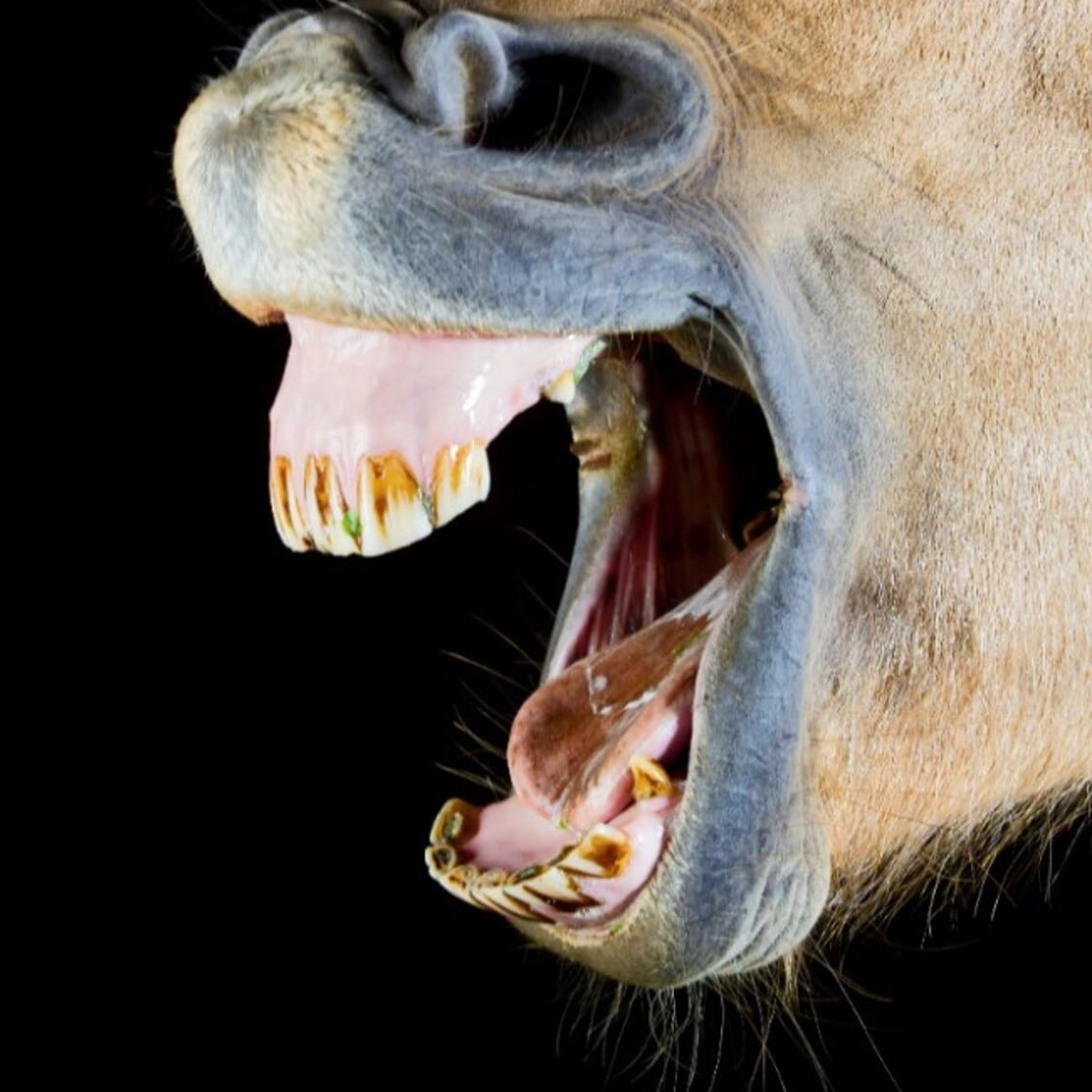
If you do not want to invest in a good equine dentist and have them visit at least once a year, you really cannot use a bit. A bit belongs in a painless horse’s mouth. Unfortunately, almost all horses are masters at showing as little pain as possible. It is therefore extra important to have a dentist examine the inside of the mouth and provide treatment if needed. When facing resistance on the bit or starting with a bit, always begin with the question: when did the dentist last visit? Do not start with the question: do I need a new bit?
Inspect the bit carefully
When you hold a bit in your hand, it should not feel sharp anywhere or have so much play that a thin layer of skin could get caught. I do not necessarily mean an impressive-looking bit, but also a “simple” D-ring snaffle (snaffle is the American term for a bridle bit). If the finish is smooth and rounded, you will notice it, and so will your horse in its mouth. For bits with a moving mouthpiece—almost all snaffles, and for example the correctional bit—it is important that all attachments are as small and rounded as possible. The larger, for example, the rings of a single-jointed mouthpiece, the more point pressure is applied to the tongue. The more angular the attachments, the more the bit affects the mouth.
Different materials
The material can also play a role in choosing a bit. 80% of horses perform better on sweet iron than on other materials, as it tastes sweet to the horse, as the name suggests. Copper can help horses relax more easily; it feels less cold in the mouth and some horses prefer the taste. Many of the mouthpieces we sell have both. These metals will oxidize and change color, which is desirable and improves the bit rather than harms it. There are some stainless steel bits on the market, mostly because they are cheaper, and they suit a small group of horses that are allergic to other materials. Never buy rubber, as it can cause burns if there is little saliva. There are also now plastic bits available, which are light and comfortable for horses that do not tolerate metal well.
Bit size and thickness
The size of your bit depends on your horse’s anatomy. Sprenger, in collaboration with the University of Veterinary Medicine Hannover, conducted research on oral space. It was found that the maximum space is only 3.5 to 4 cm (even in western breeds). The tongue is not included in this measurement, so depending on its thickness, subtract another 2 to 2.5 cm, leaving roughly 1.5 cm for the bit. Other factors include the width of the lower jaw and the thickness and length of the lips. The wider the lower jaw, the more space there is for the tongue, creating more room for the bit. The tongue is a very sensitive and strong muscle with many delicate nerves. There are many variations in thickness and width among horses. Many horses have fairly thick lips extending inward, which can be affected by a moving bit. Gently pulling the lip outward can give a good indication, and by feeling carefully, you can detect any damage.
You will also notice differences in the layers of the jaw. The layers—pieces of the jaw covered with skin where no teeth are present—can have thick or thin skin, be V-shaped and sharp, or broad and flat. Run your thumb over them to feel how sensitive they are for your horse. Inspect the rest of the horse’s skull: what is the shape, are there abnormalities? Do you feel irregularities, swellings, or warm spots? Gently open the lips and check if the color is consistent with the rest of the gums. When a dentist or veterinarian visits, observe: what do the tongue and palate look like, are there any injuries?
Most horses really do not have room for a thick bit. In the past, a thick bit was said to be gentler because it distributes pressure, but if a thick bit constantly applies pressure due to lack of space, it is actually uncomfortable.
The thinner the bit, the greater the effect at the point of contact. From a western riding perspective, where continuous contact is not required, a narrower bit is often more comfortable and clearer when you do apply pressure.
Height
Depending on your trainer, my advice is to position the bit so that a lady’s thumb can fit between the mouthpiece and the front teeth. This may create one fold in the corner of the mouth in one horse and up to three in another. A bit hanging loosely in the mouth causes very restless tongue use and thus body use. Additionally, if it hangs so low that it touches the lower teeth, it can damage them and make them sensitive. Excess pressure on the corners of the mouth is also uncomfortable, and constant pressure may cause your horse to react “stiffly.” This is why it is important to assess each horse individually.
Length
A shank bit or a D-ring snaffle may fit snugly against the lips or have a few millimeters of space. Actual pressure on the lips is incorrect, and more than 0.5 cm of space is also not correct. A loose ring snaffle may protrude about 0.5 cm on each side but should not fit completely flush, as the movement between the mouthpiece and bit ring can damage the corner of the mouth.
Western bits commonly come in sizes 5 inch and 5 1/8 inch (12.5 cm and 13 cm), which is sufficient for many western breeds. Brands like Tom Balding also offer custom sizes.
Which bit for competitions
One last point to consider for competitions: which bits are allowed according to your association’s rules? When in doubt, ask the bit judge or jury, as rules vary per organization and may change yearly.
I understand that it may still not be entirely clear which bit to choose, but at least you now know what to pay attention to. Of course, there are some guidelines, which I am happy to share. Keep in mind, these are based on my preferences and experience, and your trainer may have different ideas.
Starting a horse without a bit
For a very inexperienced or young horse, I would start by training it under saddle without a bit. Walking, trotting, and cantering in a round pen give the horse many new impressions and aids. The horse must get used to your weight and position, your voice from the back, and your leg aids. Steering and pressure on the nose are likely already familiar from halter work. By not using a bit right away, you prevent negative associations. Only introduce the bit once the horse understands your other aids under the saddle. The bit then becomes an additional, light aid.
The function of a snaffle is to support balance, the D-ring provides stability, and the O-ring snaffle provides mobility.
Introducing the snaffle bit
For a horse just beginning with the bit, I would start with a single-jointed D-ring snaffle. Because it is single-jointed, it lies still in the mouth and does not bend around the tongue and lower jaw like a double-jointed bit. These are stable mouthpieces that provide clarity to an initially unsettled mouth.
The D-rings guide the upper and lower jaw slightly when pressure is applied, helping the horse understand direction and lateral movement. It allows the horse to better balance its head and create straight shoulders. D-rings also often prevent broken corners of the mouth, especially in inexperienced horses or horses with thick lips.
During the acclimation phase, focusing on vertical balance, rhythm, and relaxation, I recommend a D-snaffle. However, it creates a slightly “stiff” jaw and shoulder, so when the horse no longer needs this aid, it is better to switch to a single-jointed loose ring snaffle. The loose rings give the horse more space for flexion and relaxation, as well as better use of the hind legs. When working on horizontal balance and further movement development, I recommend a loose ring snaffle.
“Function of a snaffle: support balance, D-ring: stability, O-ring snaffle: mobility.”
The shank bit
Once your horse is 100% vertically balanced and at least 50% horizontally balanced, and you begin working on collection, strength, and one-handed riding, you can switch to shank bits.
The longer the shank, the greater the leverage and effect on the horse. The straighter the shank, the purer and more direct the action. The more backward-bent the shank, the less the effect. A shank is always used with a curb strap or chain, which limits leverage and is crucial. A shank bit creates pressure on the chin groove, then the tongue, bars (depending on the mouthpiece), and behind the ears. Without a chain, the shank simply extends the reins, causing excessive rotation and possible irritation of the palate. This also occurs with a loose chain. When fitted correctly, your shank can tilt 45 degrees relative to the mouth without needing to loosen when putting it on or taking it off. Bit hobbles are also available to connect the lower sides of the shank, preventing independent movement and providing smoother action for the horse.
The effect
Each snaffle and shank bit acts differently depending on the attached mouthpiece:
Single-jointed mouthpieces act on the edges of the tongue and lower jaw. Pressure is applied to the tongue edges by the V-shape, reducing pressure in the center. It provides stability as it moves little. If the bit is too wide, a nutcracker effect occurs, pricking the palate.
Double-jointed mouthpieces distribute pressure over a larger tongue area, providing stronger action. Ensure the middle piece is not too large; it could pinch the tongue or hinge points. Correctional bits also act like double-jointed bits. Their flexibility allows action in multiple areas, useful for refined work with an experienced horse and rider, providing signals without force. The correctional bit is often used unnecessarily and can cause open mouths due to underlying training or health issues. Horses uncomfortable with it benefit more from a simple, single-jointed bit.
Solid mouthpieces are often used with shanks. Some snaffles also have solid mouthpieces, but they may not always be allowed (check your rulebook). Many horses prefer solid mouthpieces; those sensitive to bars and palate pressure often tolerate tongue pressure better and benefit from a solid, low tongue-arched bit. A higher tongue arch increases pressure on the palate.
If anatomically curved, mouthpieces encourage the horse to stretch forward, which is beneficial with a relaxed topline but may cause the horse to lean on the forehand.
Positive association
Once you have found the right bit, maintaining a positive association is key. Ensuring the horse continues to find the bit pleasant requires proper training, and consistent, careful handling when putting it in and taking it out.
Tips for handling the bit:
In cold weather, warm the bit first—either in a heated room or by rubbing it with your hands. You want to hold it against your cheek without it feeling cold or unpleasant. Once a horse learns to react to a cold bit by lifting its tongue or opening its mouth, this often persists. When removing the bit, keep the head down so it does not catch on the teeth. I personally sometimes use apple syrup on the mouthpiece to create a pleasant experience, which can be gradually phased out once the horse is comfortable.
Maintain the bit well
Check your bit daily. Is it clean? Dried-on dirt can cause irritation of the corners of the mouth, so rinse it off. Western riders, you also do not want to introduce bacteria back into the horse’s mouth, and a “familiar” smell does not make the bit more acceptable. A new bit can also be rinsed with drinking water. Check that all moving parts function properly and that there is no damage.
One last tip
A browband bridle (with brow and throat straps) can be used with any of the bits described above. A headstall without a browband or throat strap, e.g., one-ear, two-ear, or split-ear, can only be used with a shank bit. The leverage from a shank applies pressure to the headpiece, keeping it secure under rein pressure. Pressure on a snaffle loosens the headpiece slightly, making a brow and throat strap necessary to keep the headstall properly in place.


